Rest Assured
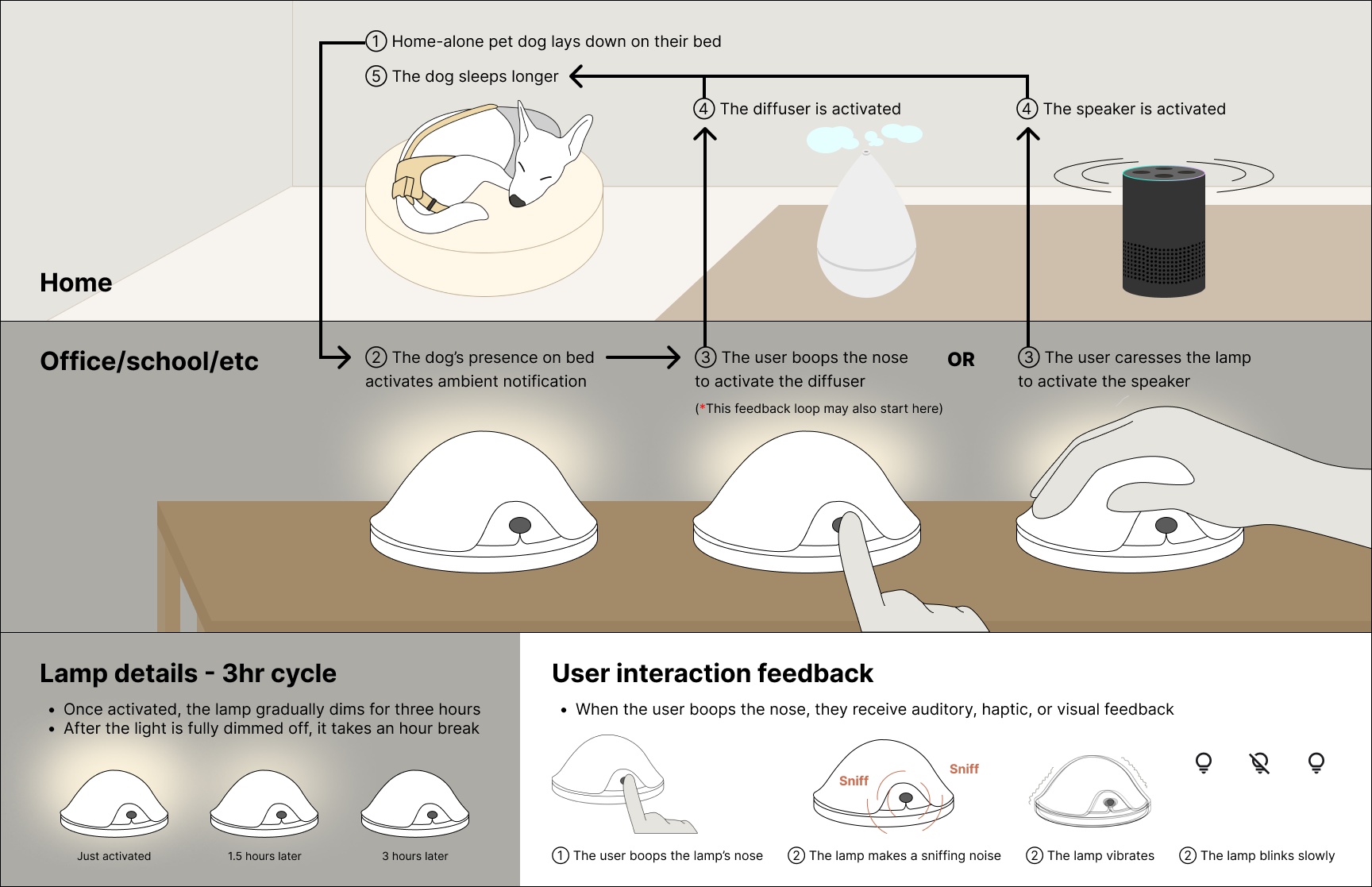
What if, instead of constant surveillance, technology could nurture a calm, reciprocal connection between us and our furry babies? Rest Assured is an IoT ambient notification system for pet dog owners to feel confident and less anxious about leaving their dogs home alone. Consisting of a smart figurine, a tail-tracking harness, and a pressure-sensing cushion, the closed feedback loop strengthens their emotional bond and encourages the dog to have a balanced schedule.
Roles
Project lead, UX design, physical computing, digital fabrication
Tools
Arduino, Rhino, 3D printing, Figma
Collaborators
Donna Kim, Ahmad Abbasi, Hong Yang
Recognition
Timeline
6 months
Context
For many dog owners, the sense of disconnection starts from the moment we close the front door. We imagine our furry babies waiting by the door, alone and worried. Despite technologies that allow constant monitoring, we feel helplessly distant and anxious about leaving them home alone.
Primary Research
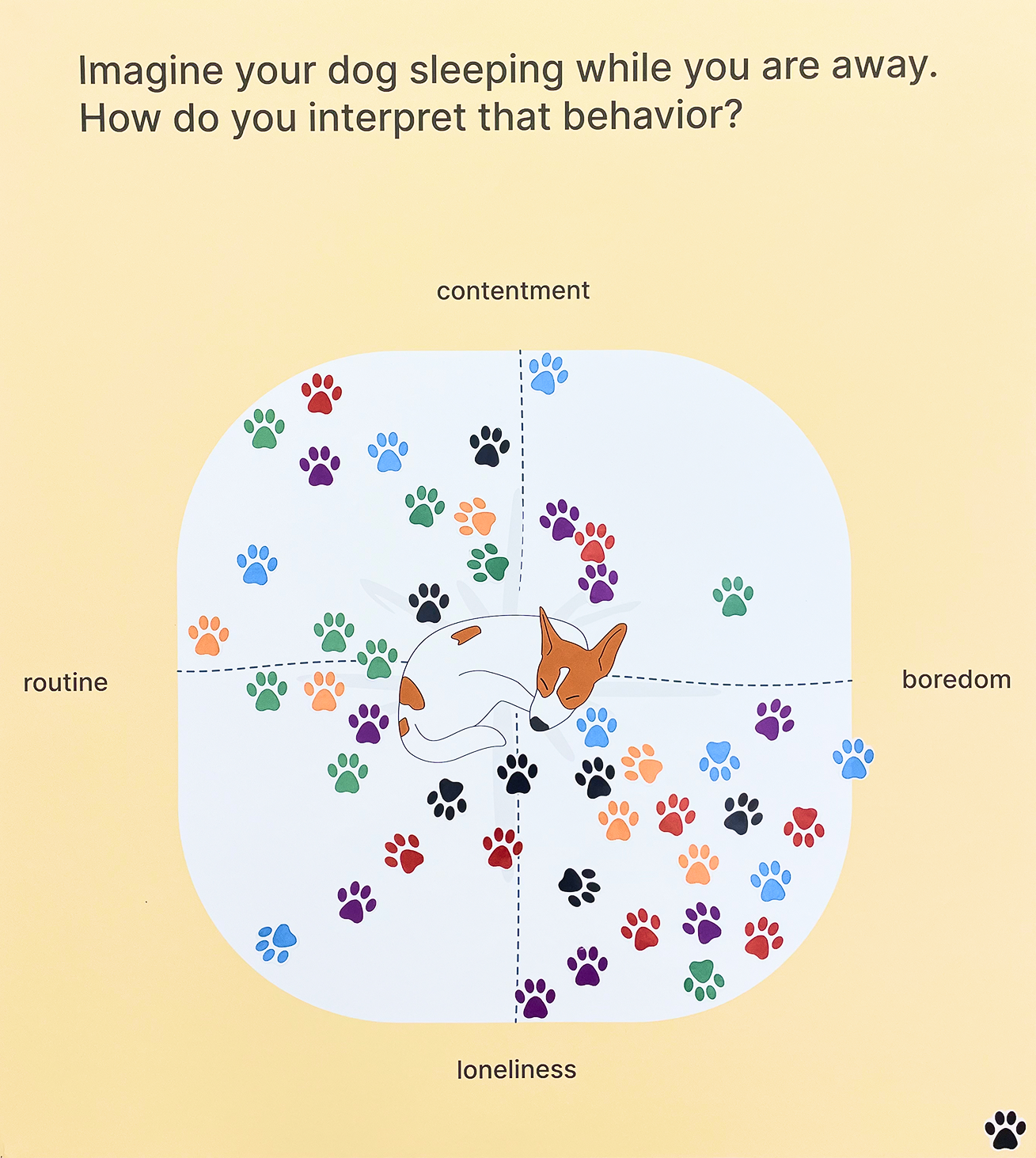
We interviewed seven dog owners to understand their biographical information, owner health impact, dog's home-alone activities, and use of pet technology.
Key Insight - Perception of Sleep
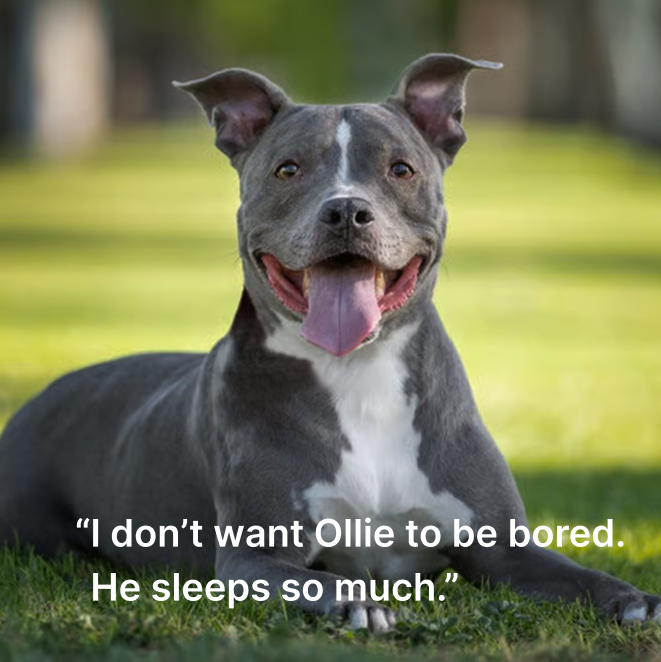
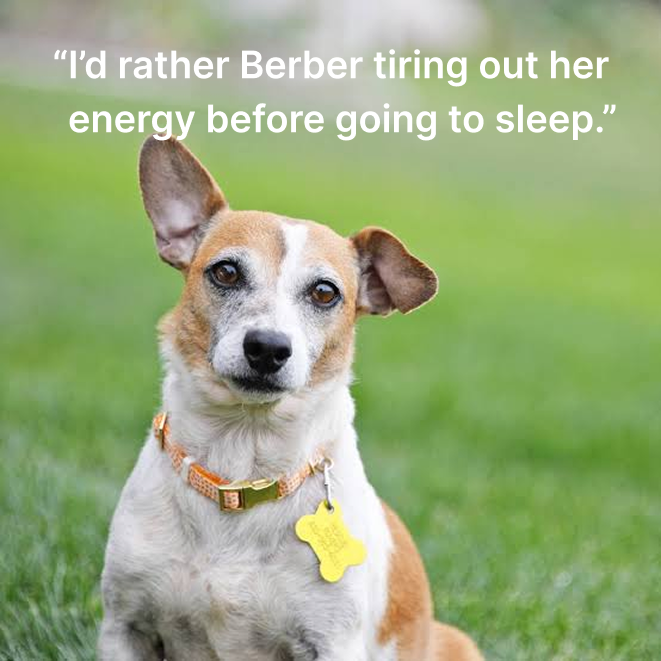
Participants perceive home-alone dog sleeping as lack of stimulation or boredom.
Problem
For many dog owners, the sense of disconnection starts from the moment we close the front door. We imagine our furry babies waiting by the door, alone and worried. Despite technologies that allow constant monitoring, we feel helplessly distant and anxious about leaving them home alone.
Application Features
Initial Prototype
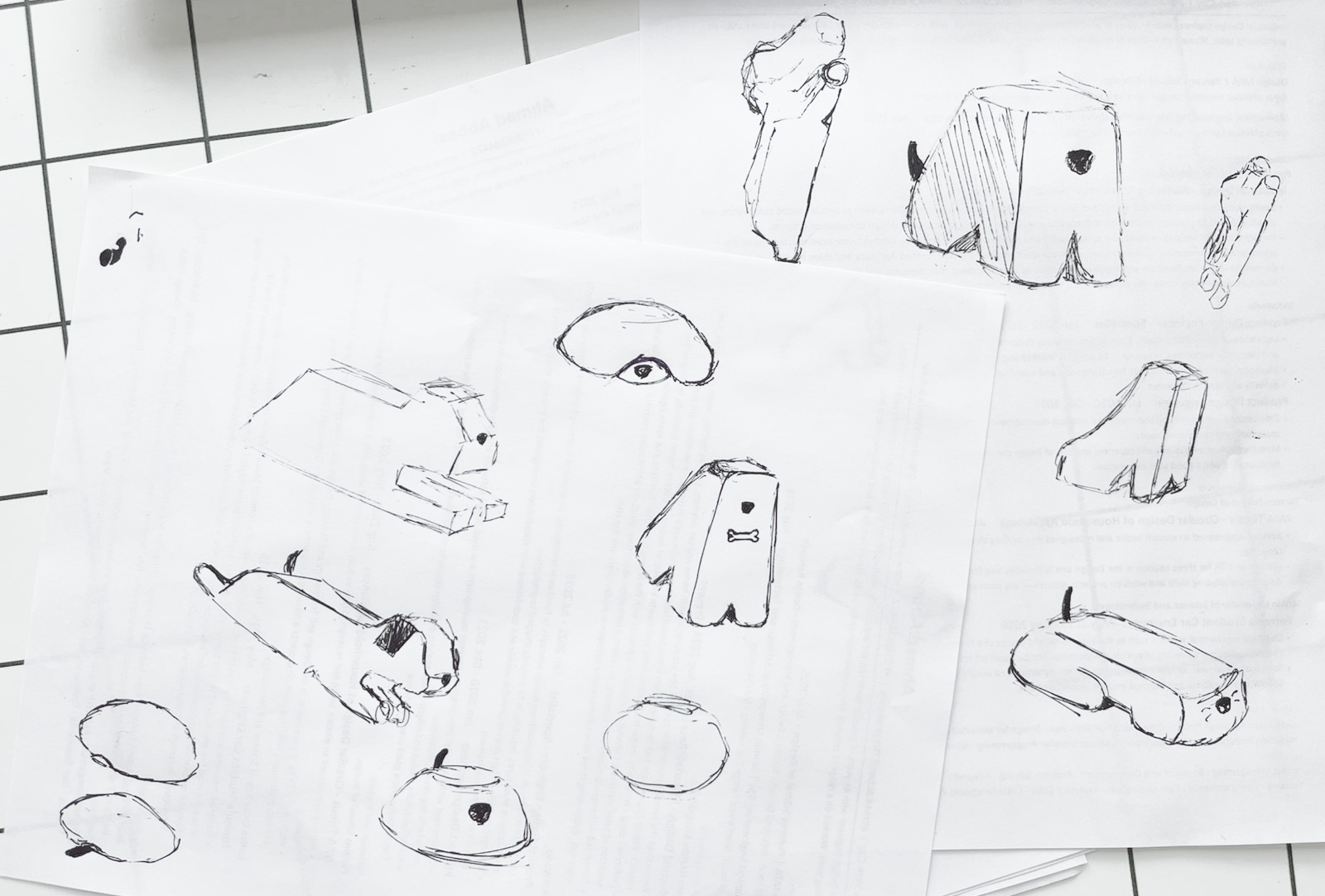
Next, we started sketching the "look & feel" and caught ourselves wondering: Every dog looks different, but what do they have in common when sleeping? With the intention of provoking a sense of “personal, heart-warming, minimalistic, calming, and reassuring,” we chose a design of a sleeping dog hidden under a blanket, with only the nose exposed.
02. Tail Tracking Wearable
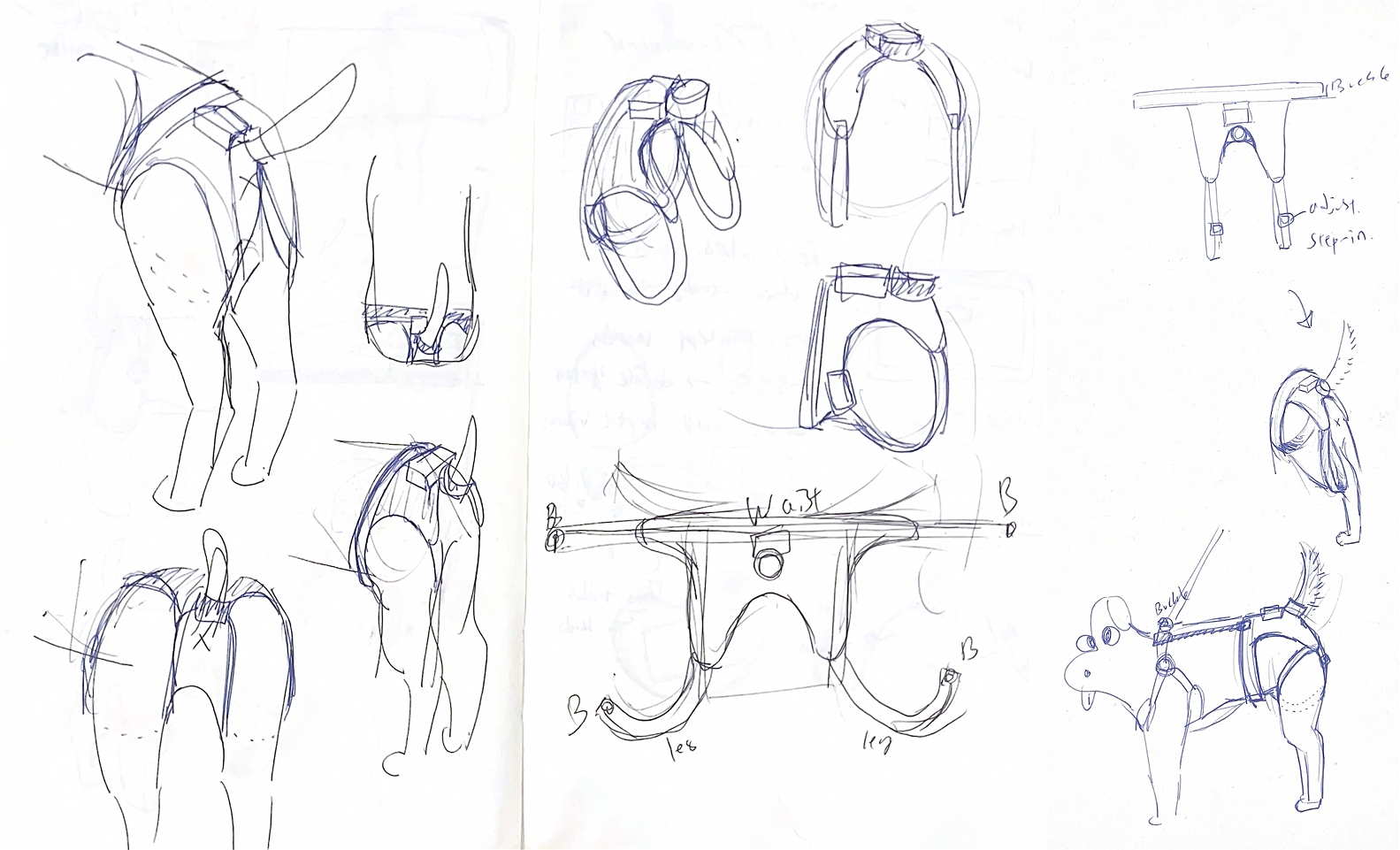
To minimize desensitization training for dogs and their owners and address safety concerns, we decided on the form factor of a harness, borrowing from commercially available dog diapers and pants. Our key design considerations include safety and comfort for the dog, stability of the IMU, and ease of use for the owner.
.png)
03. Pressure Sensing Cushion
%20illust.png)
01. Ambient notification figurine
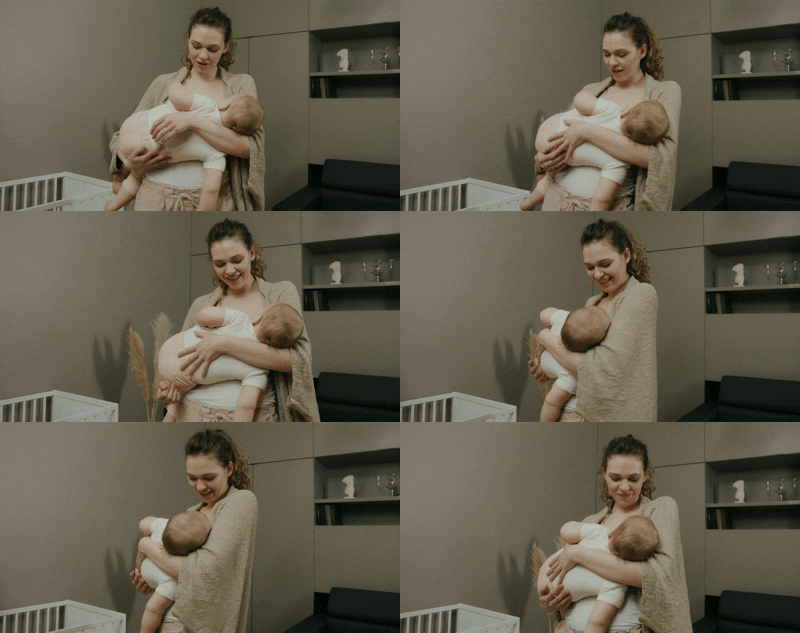
Rather than being limited by the form factor of a dog-like appliance, we started by brainstorming intuitive interactions users might have with the device.



.gif)

Next, we started sketching the "look & feel" and caught ourselves wondering: Every dog looks different, but what do they have in common when sleeping? With the intention of provoking a sense of “personal, heart-warming, minimalistic, calming, and reassuring,” we chose a design of a sleeping dog hidden under a blanket, with only the nose exposed.
02. Tail Tracking Wearable
To minimize desensitization training for dogs and their owners and address safety concerns, we decided on the form factor of a harness, borrowing from commercially available dog diapers and pants. Our key design considerations include safety and comfort for the dog, stability of the IMU, and ease of use for the owner.
03. Pressure Sensing Cushion

Breathability
Open palm
Fingerless
Elasticity
Knitted
Adjustable straps
Durability
Knitted
User Testing
We followed up with the dog owners to understand their 1) initial impression of device, 2) potential usage, 3) preference for feedback types, and 4) additional features.
Key Insight - Potential Usage
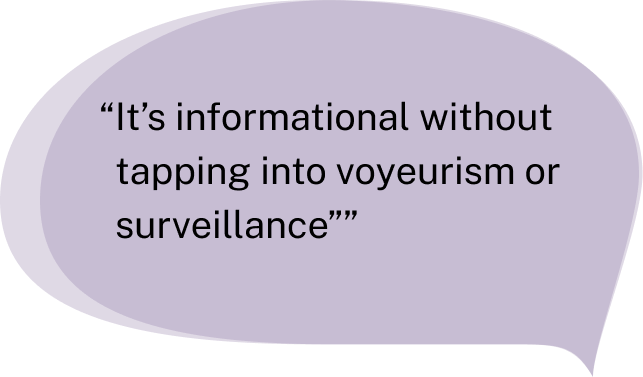
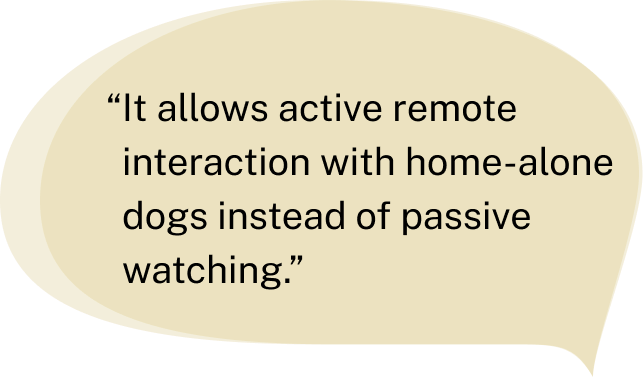
Participants are open to using the system in their everyday life, though use scenarios are dependent on participants' daily schedules.

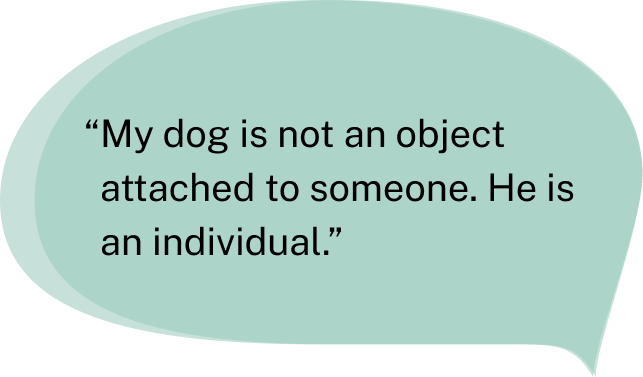
Participants see the device as an extension of their pet dog.
.gif)
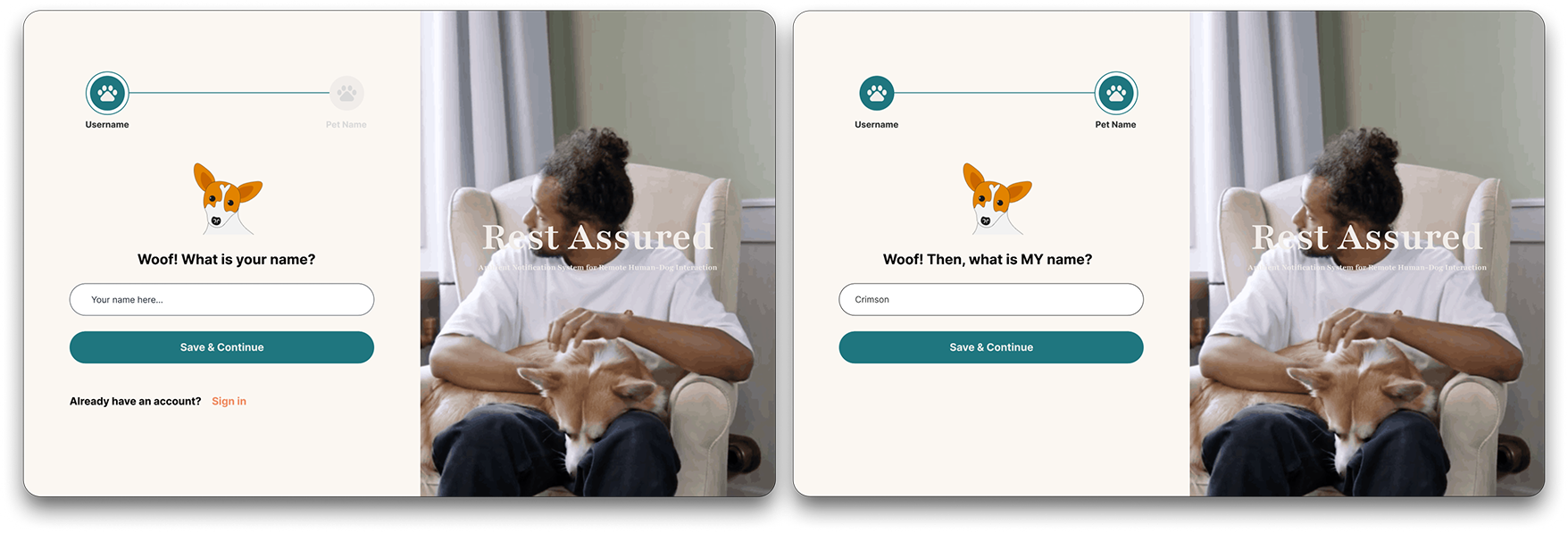
UI/UX System
Demo UI/UX design
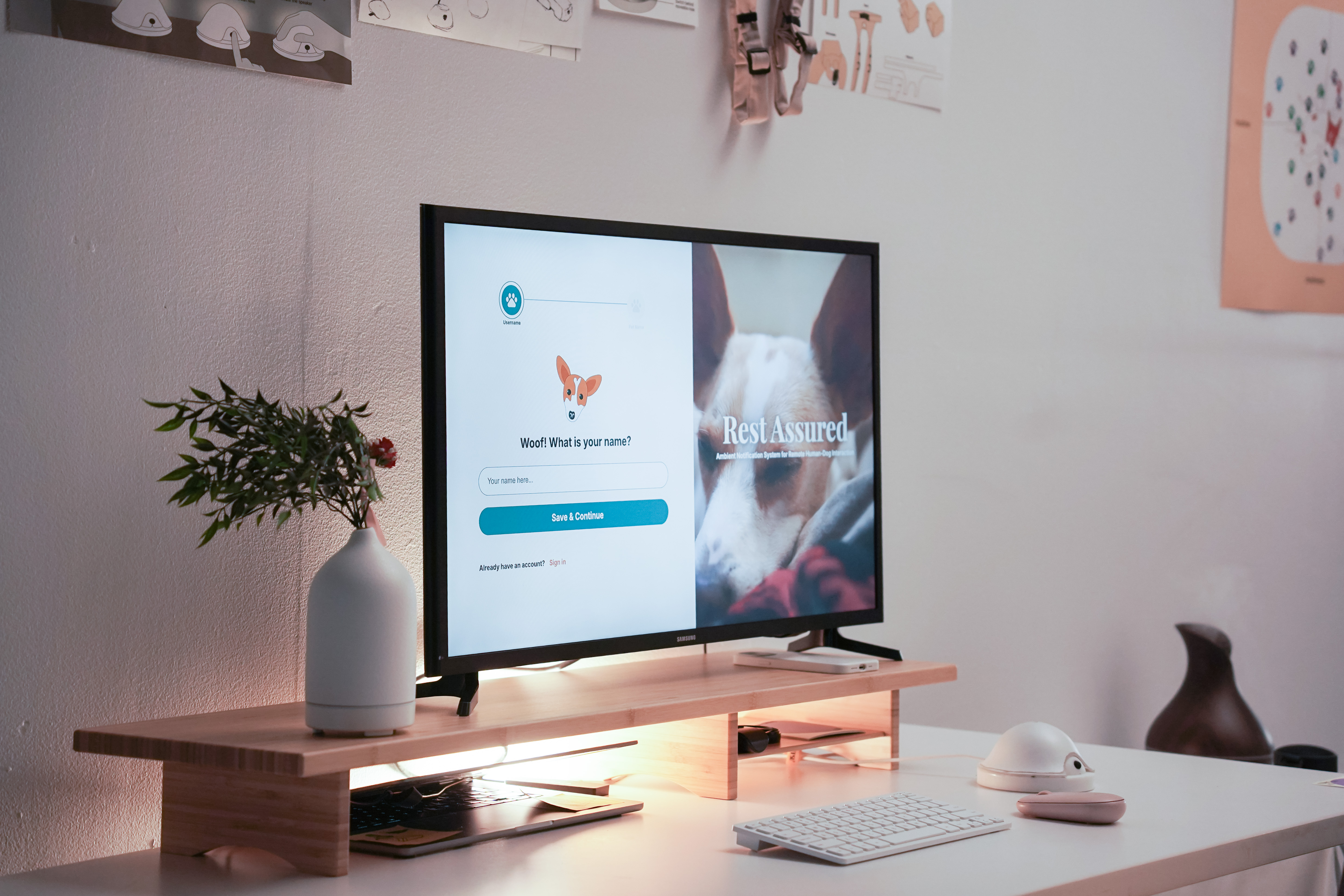
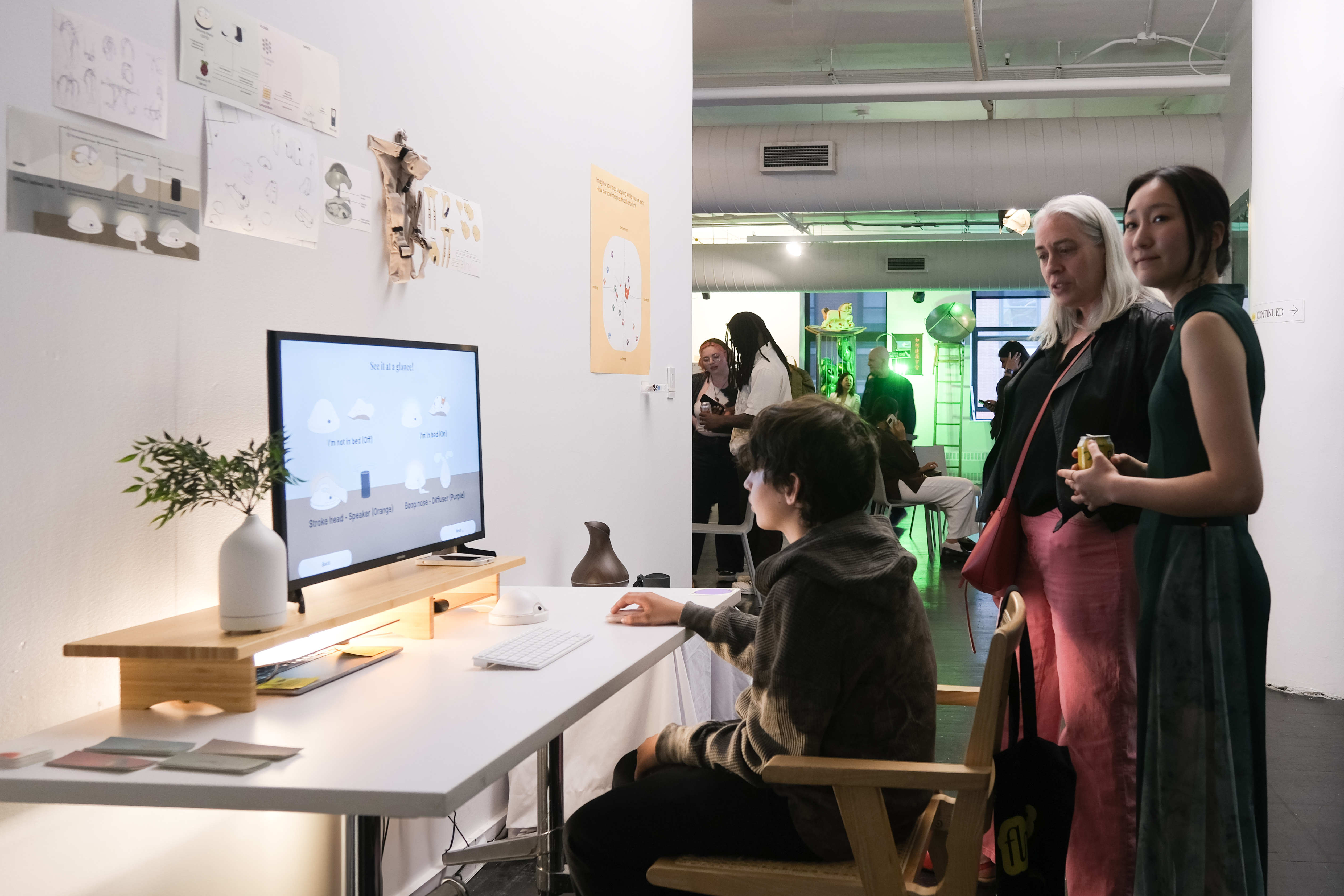
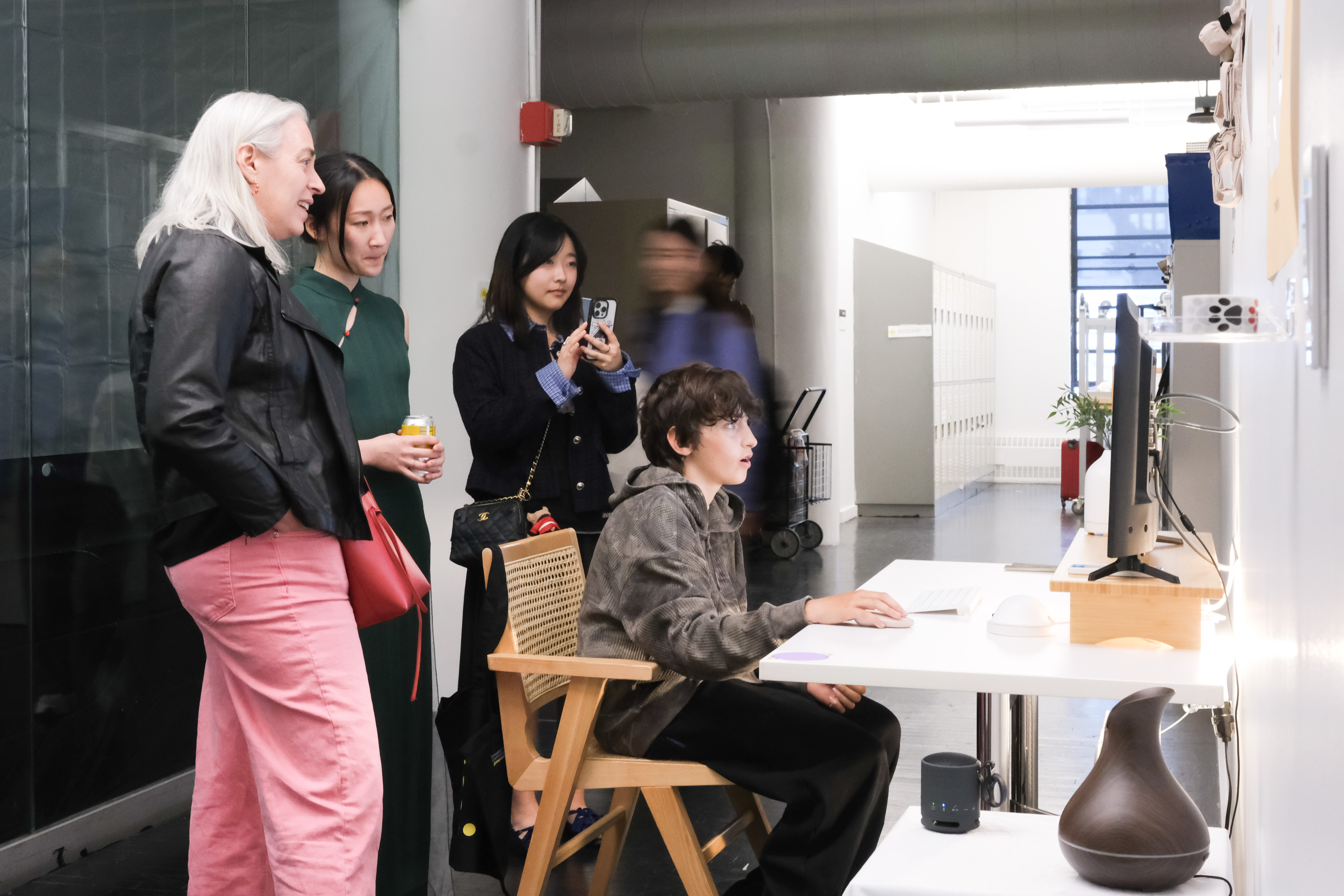
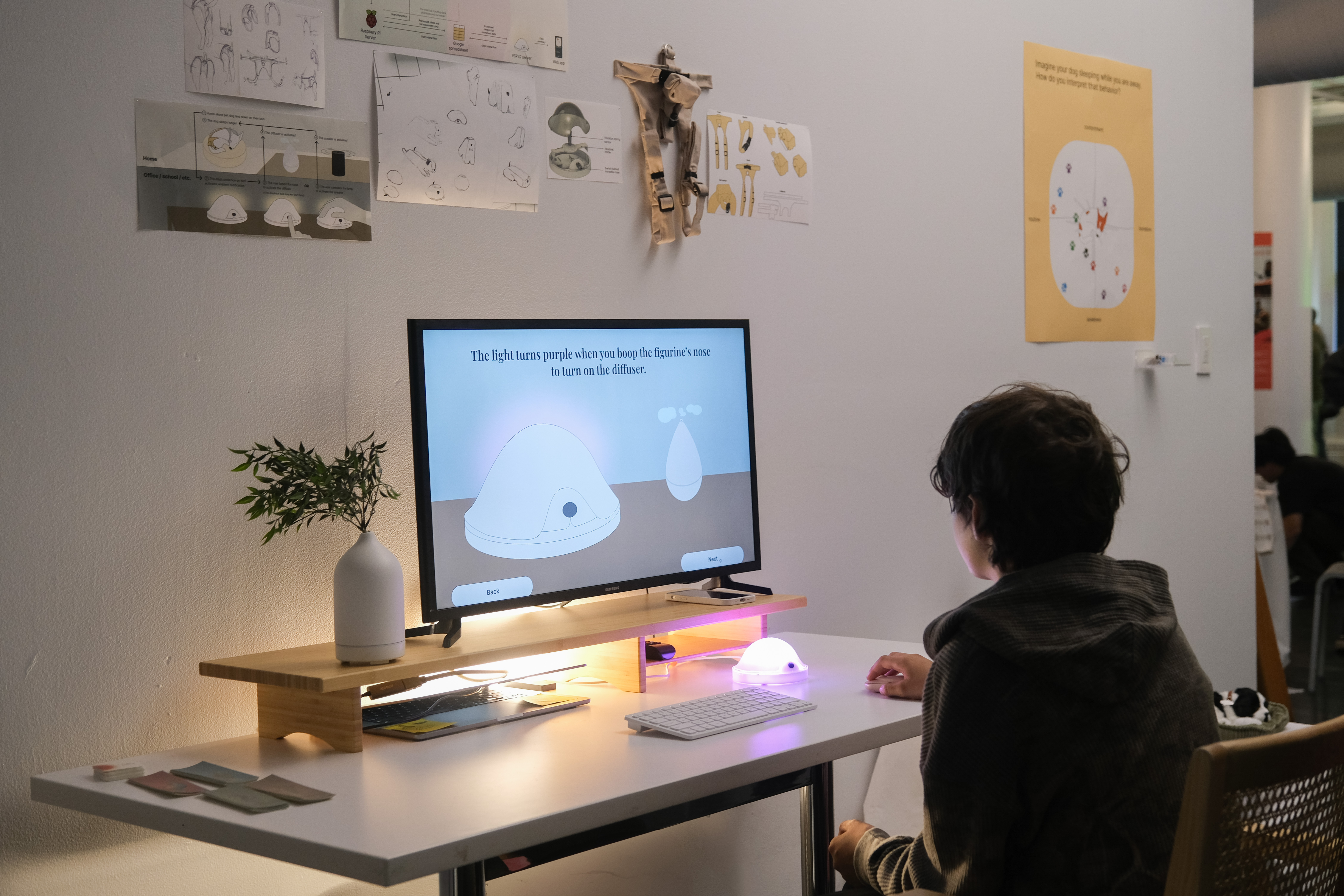
To demonstrate our prototype at TEI conference, we were tasked with translating a complex system into an engaging onboarding experience within 3-5 minutes.
01. User flow
We brainstormed the user flow for the actual "Rest Assured" app before identifying key frames for onboarding demonstration.
02. Product use scenario
To explain the product's unique remote use scenario, we used a split screen layout to showcase figurine as a remote control for home environment.
03. Physical-digital interaction design
Using distinct fonts and speech bubbles, we stylized two types of UX writing to help users smoothly navigate between the digital and physical interfaces.
04. Gamified quiz
05. Moving beyond Figma prototypes
Merch Design
Key Results
30
26
2.1k
User interactions
GoFundMe donations
Travel fund raised
Next Steps
One major concern in our approach is: “Are those technology-mediated experiences what animals want to experience or are they rather what humans want for them and for themselves?” In face-to-face interactions with humans, dogs commonly initiate desirable interactions with their owners. “Rest Assured” was conceived to solve an intrinsically human-centered problem, though its framework acknowledges the impact that pet dogs may have on their owner’s physical and mental wellbeing.
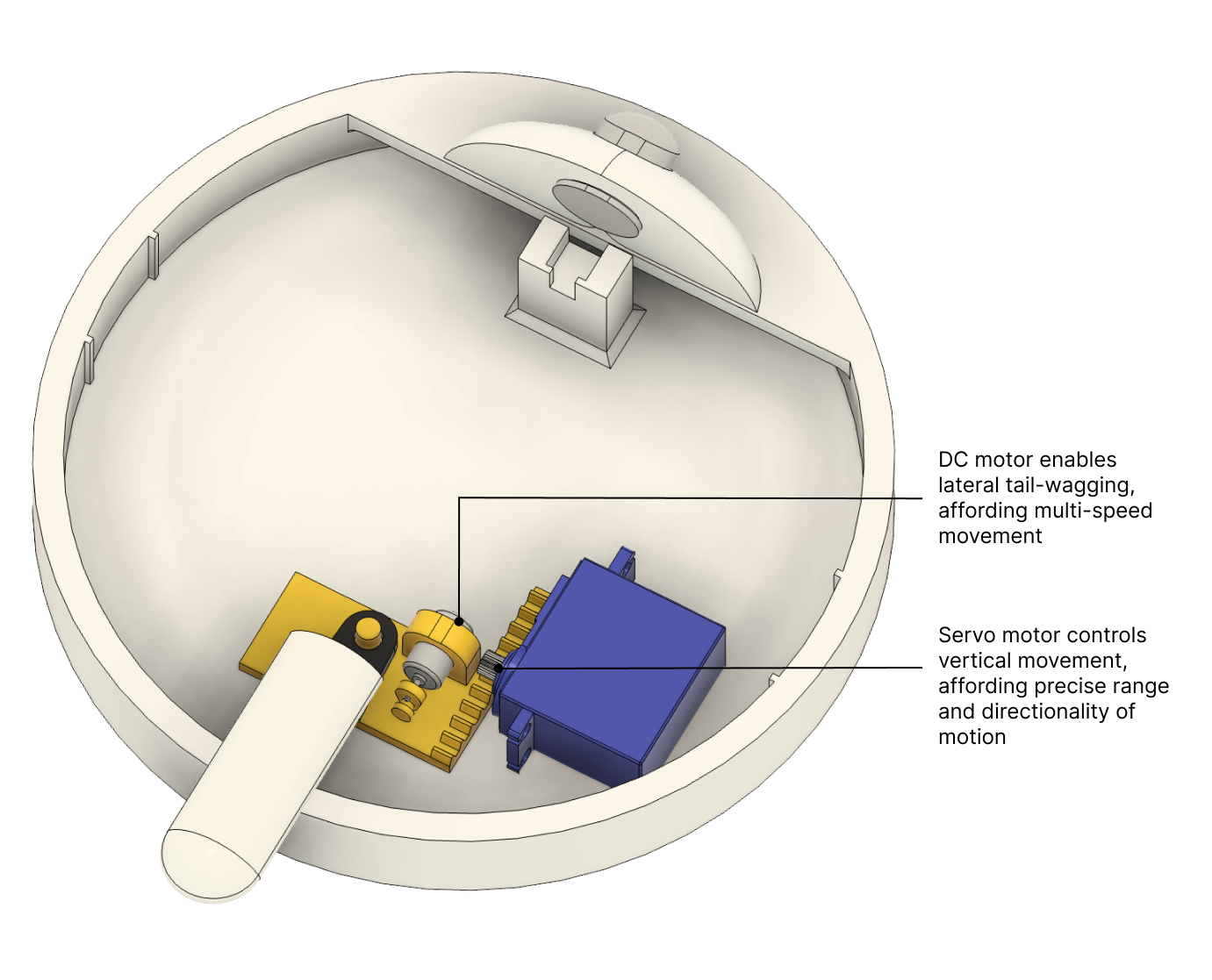
Our current tail-tracking prototype is attached to the base of the tail and may be used for emotional states detection. We plan to incorporate a motorized tail to represent different emotional states in a non-intrusive way. To understand tail-wagging behavior, we need to establish the natural tail position, accounting for individual and breed differences in each canine user. Such consideration of canine user differences may be calibrated by the human user following instructions on a digital interface.
Special thanks to
Ayodamola Okuseinde, David Carroll, and Harpreet Sareen for their feedback on our prototypes; Barbara Morris for her feedback on writing; Luisa Ruge for her guidance on Animal-Computer Interaction design
This project would have been impossible without the unwavering support from Parsons DT community and open-minded dog owners in our neighborhood during rapid prototyping and user testing.