Stroke Imprint
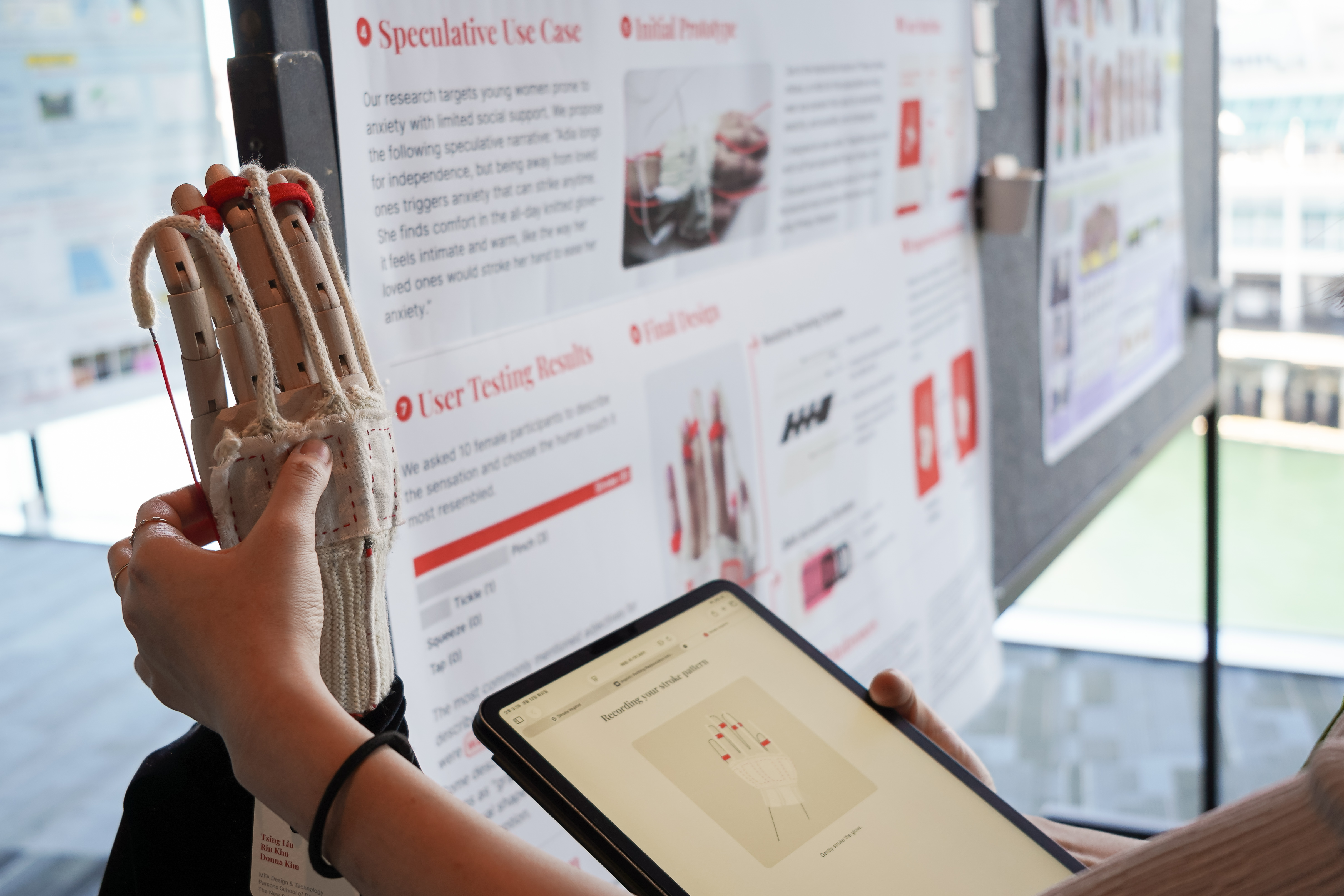
Imagine if, during moments of heightened anxiety, you could once again feel the gentle, familiar touch of a loved one’s hand. Stroke Imprint is a knitted wearable that simulates stroking sensations. Paired with a digital interface, the glove allows young women experiencing anxiety to record personalized tactile sensations.
Roles
Project lead, UX design, physical computing & fabrication
Tools
Figma, Figma Make, Supabase, Arduino
Collaborators
Donna Kim, Rin Kim
Timeline
3 months
Context
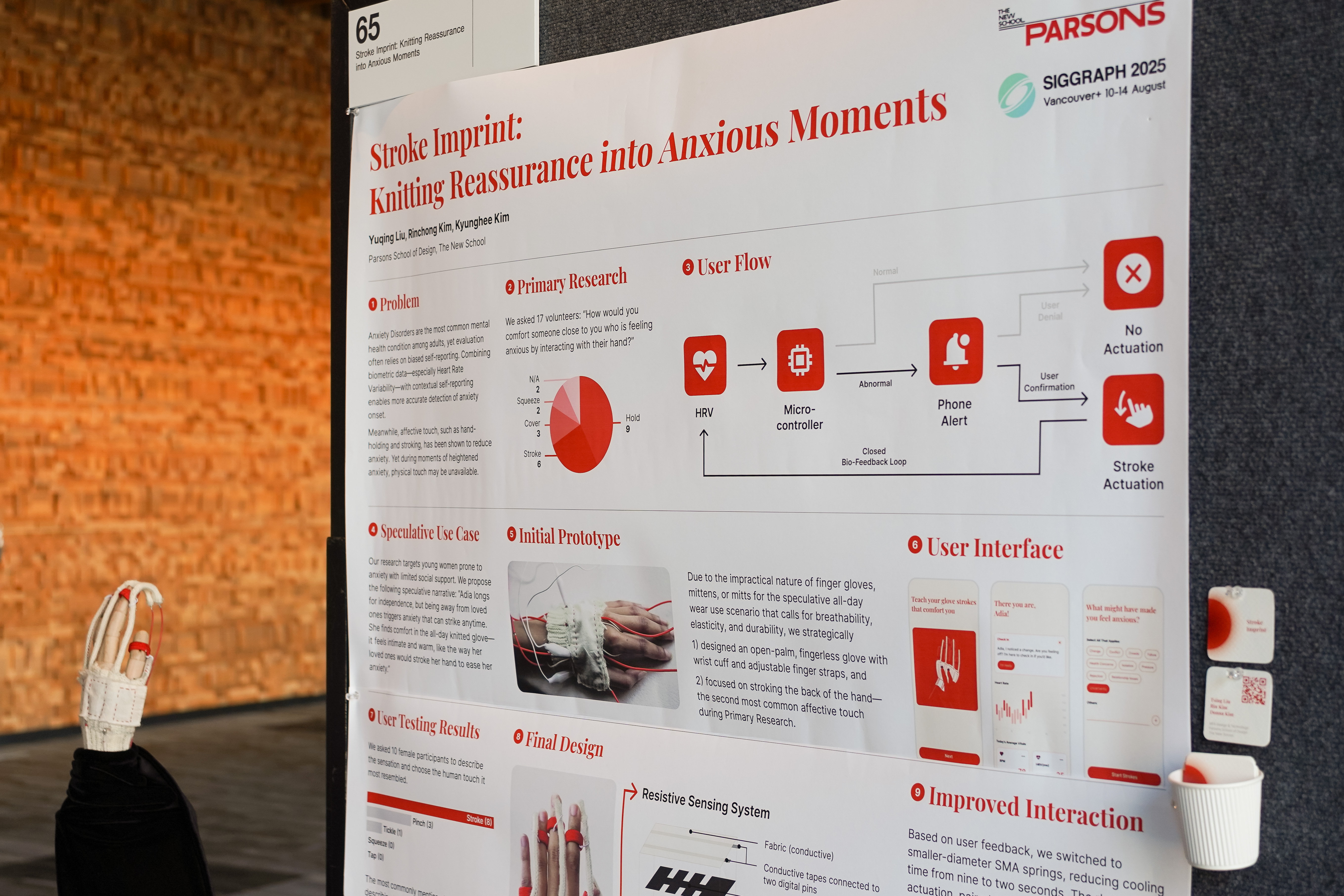
Anxiety Disorders are the most common mental health condition among adults, yet evaluation often relies on biased self-reporting. Combining biometric data with contextual self-reporting enables more accurate detection of anxiety onset.
Meanwhile, affective touch, such as hand-holding and stroking, has been shown to reduce anxiety. Yet during moments of heightened anxiety, physical touch may be unavailable.
Primary Research
We asked 17 volunteers: “How would you comfort someone close to you who is feeling anxious by interacting with their hand?”


Application Features
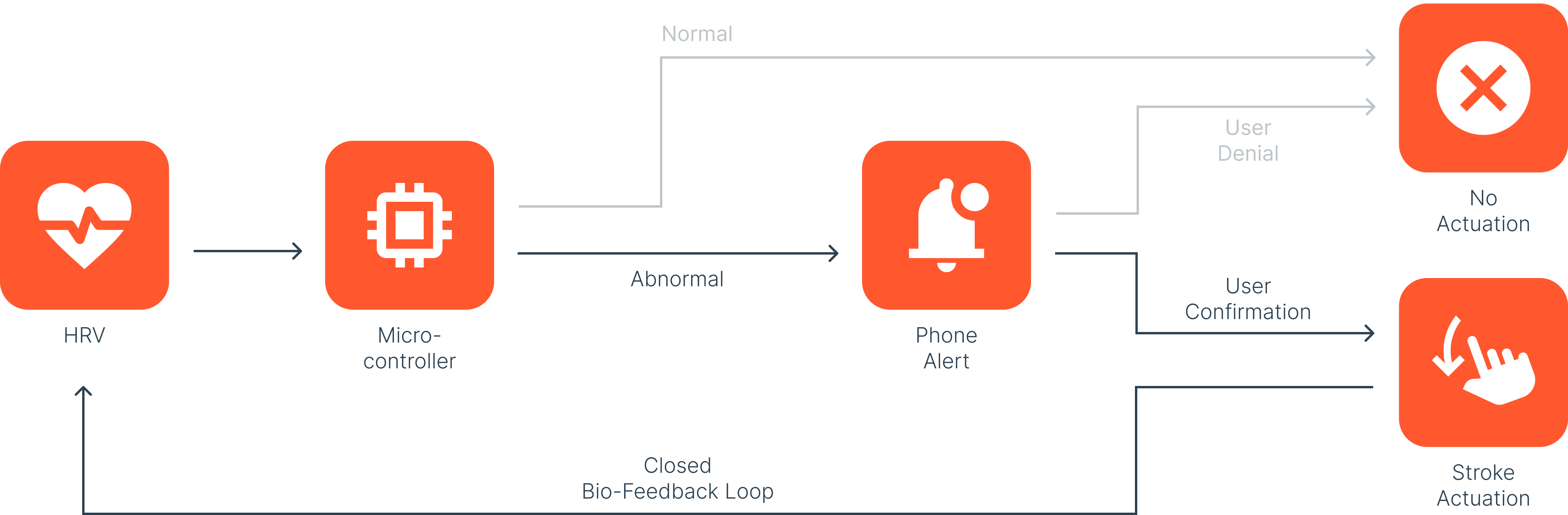
UI/UX System
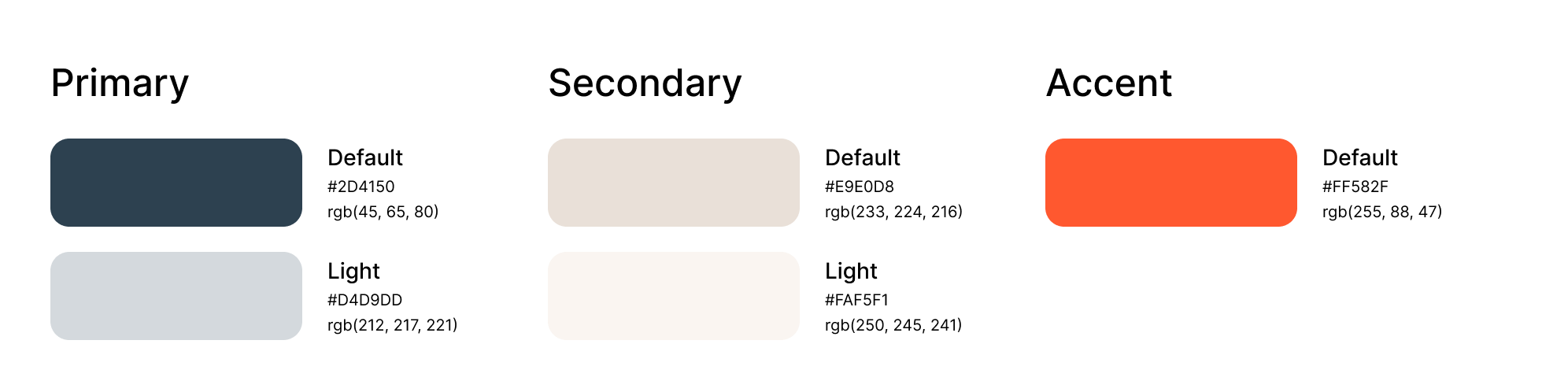
01. Color Palette
We used neutrals and dark cyan as the main colors, and orange as the accent for a calming, reassuring user experience with a hint of warmth.
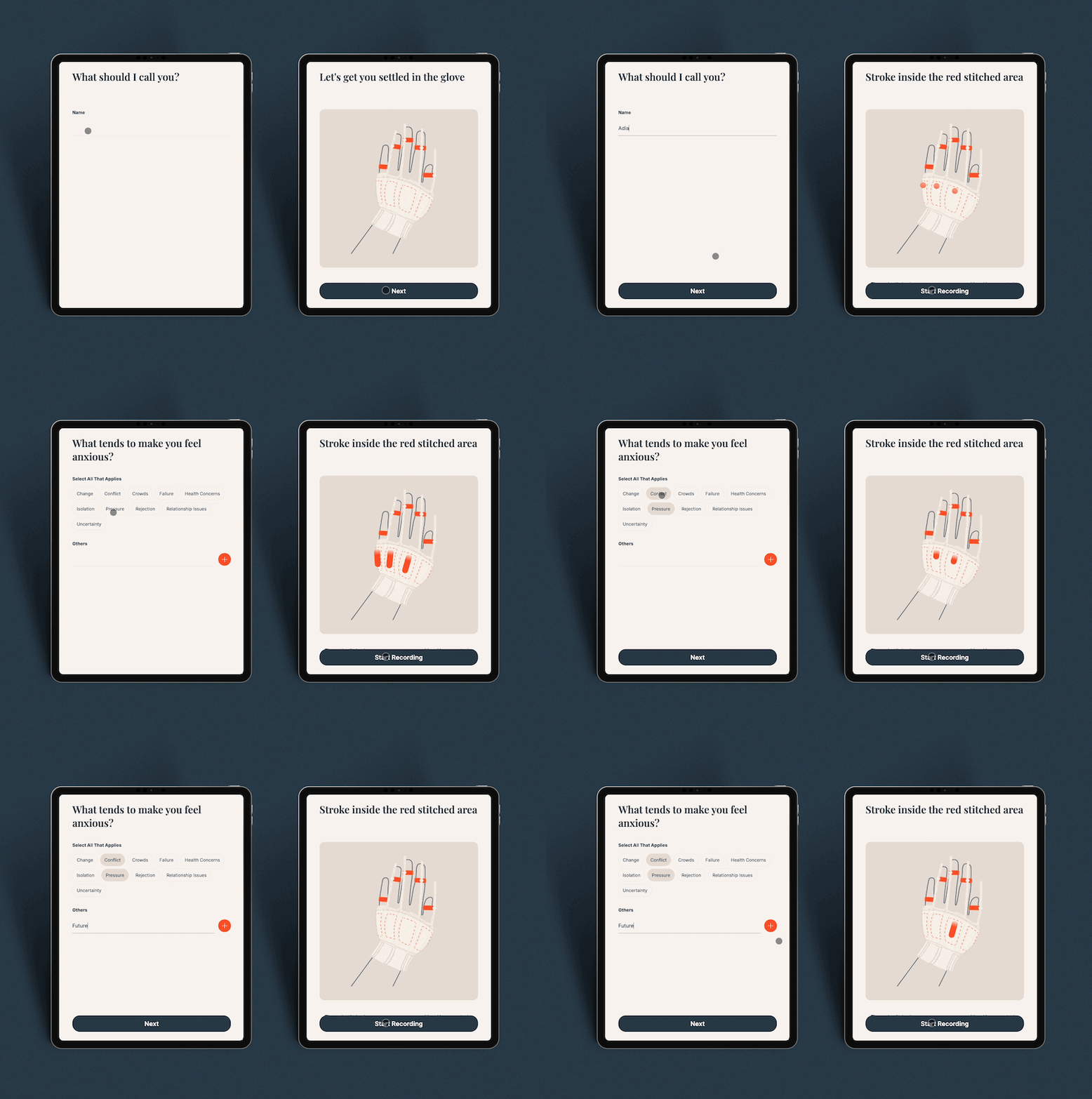
02. From Clinical to Caring
We pivoted the lens of accessing biometric data as intimacy and care. Through revised UX writing, we reframed biometric sensing as care from loved ones.
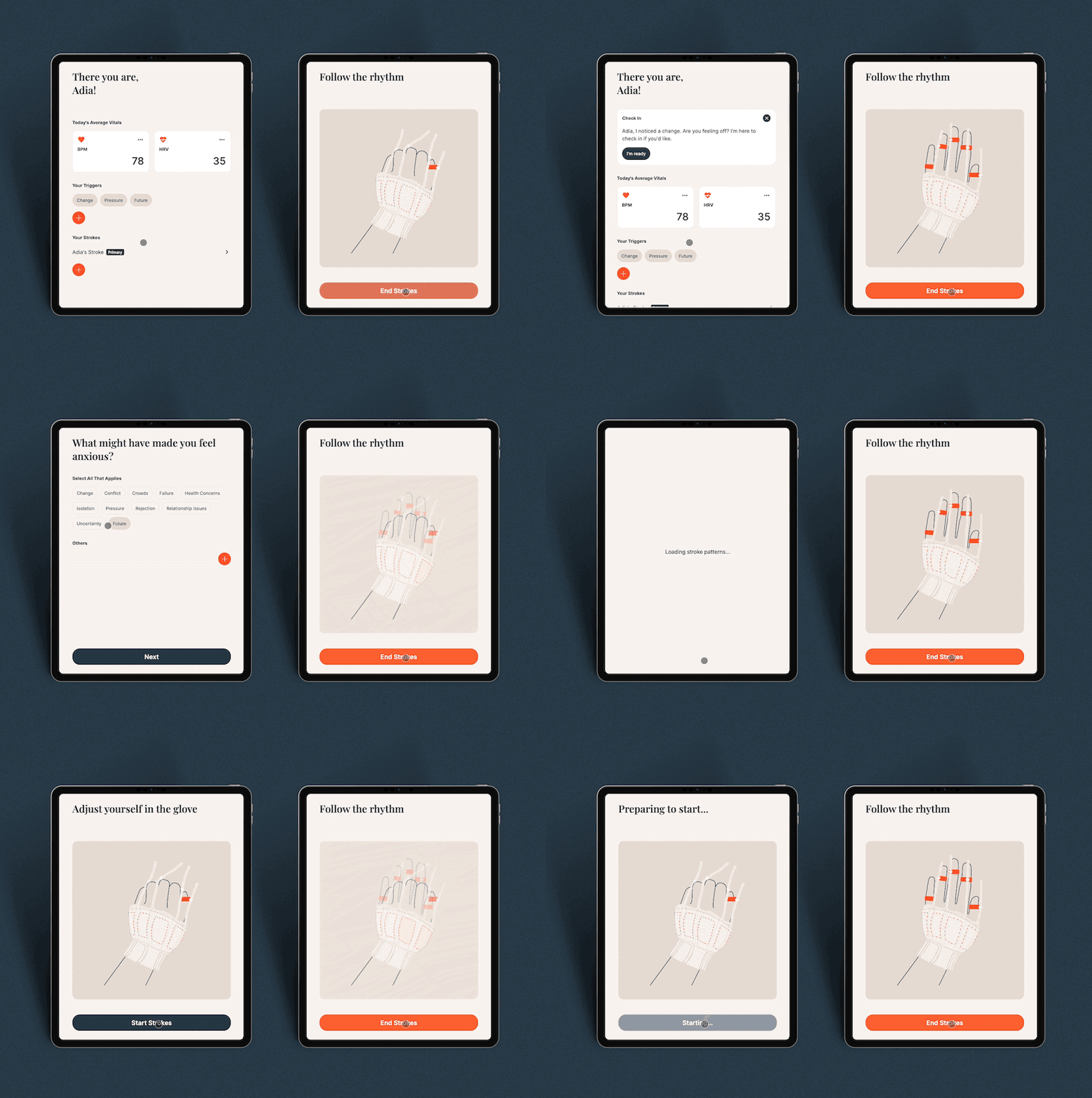
03. Interaction with Intention
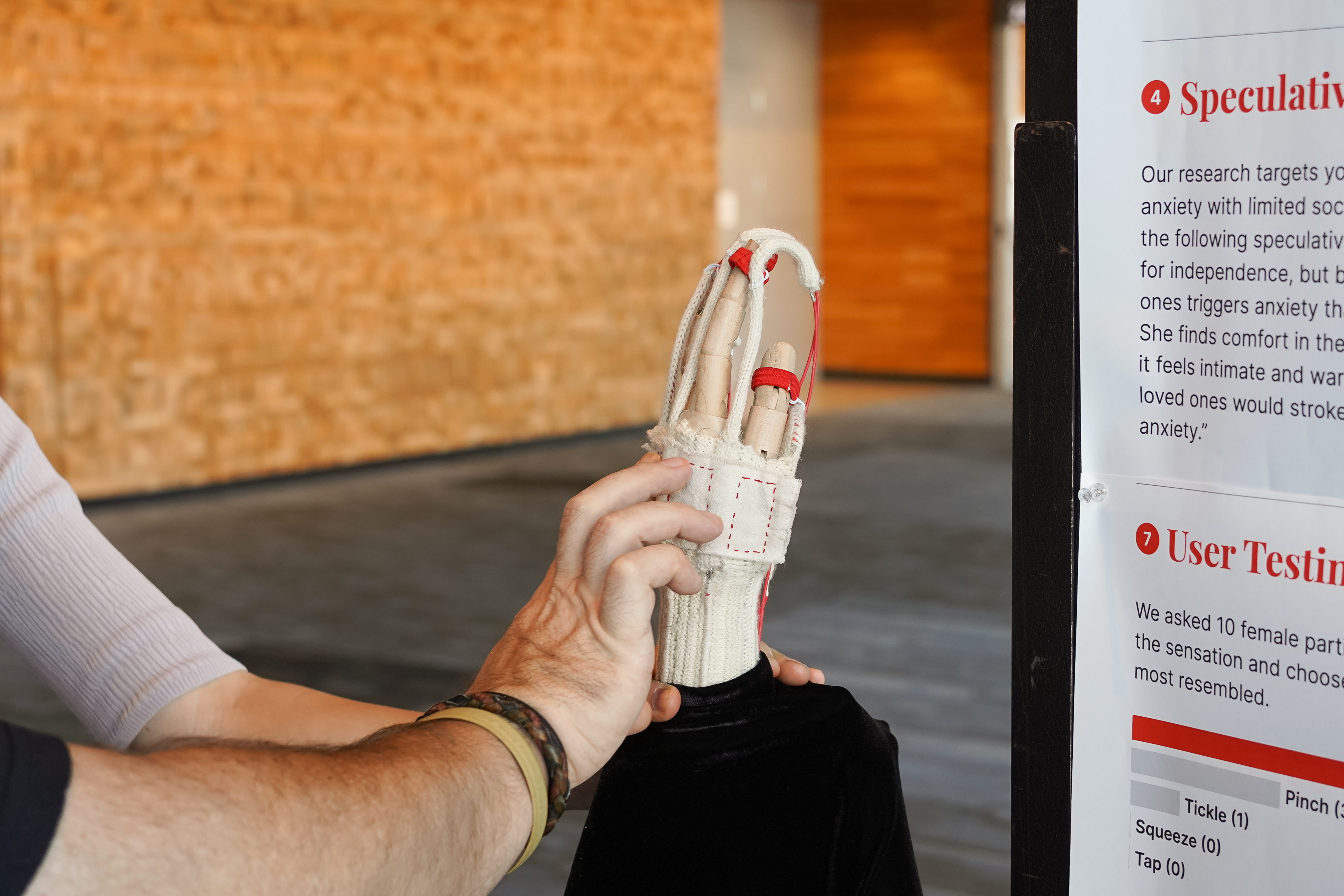
We also switched to smaller-diameter SMA springs, reducing cooling time from nine to two seconds. The rhythmic actuation, paired with clenched-fist interaction, supports stroke patterns to unbuild users’ anxiety.
Initial Pysical Prototype
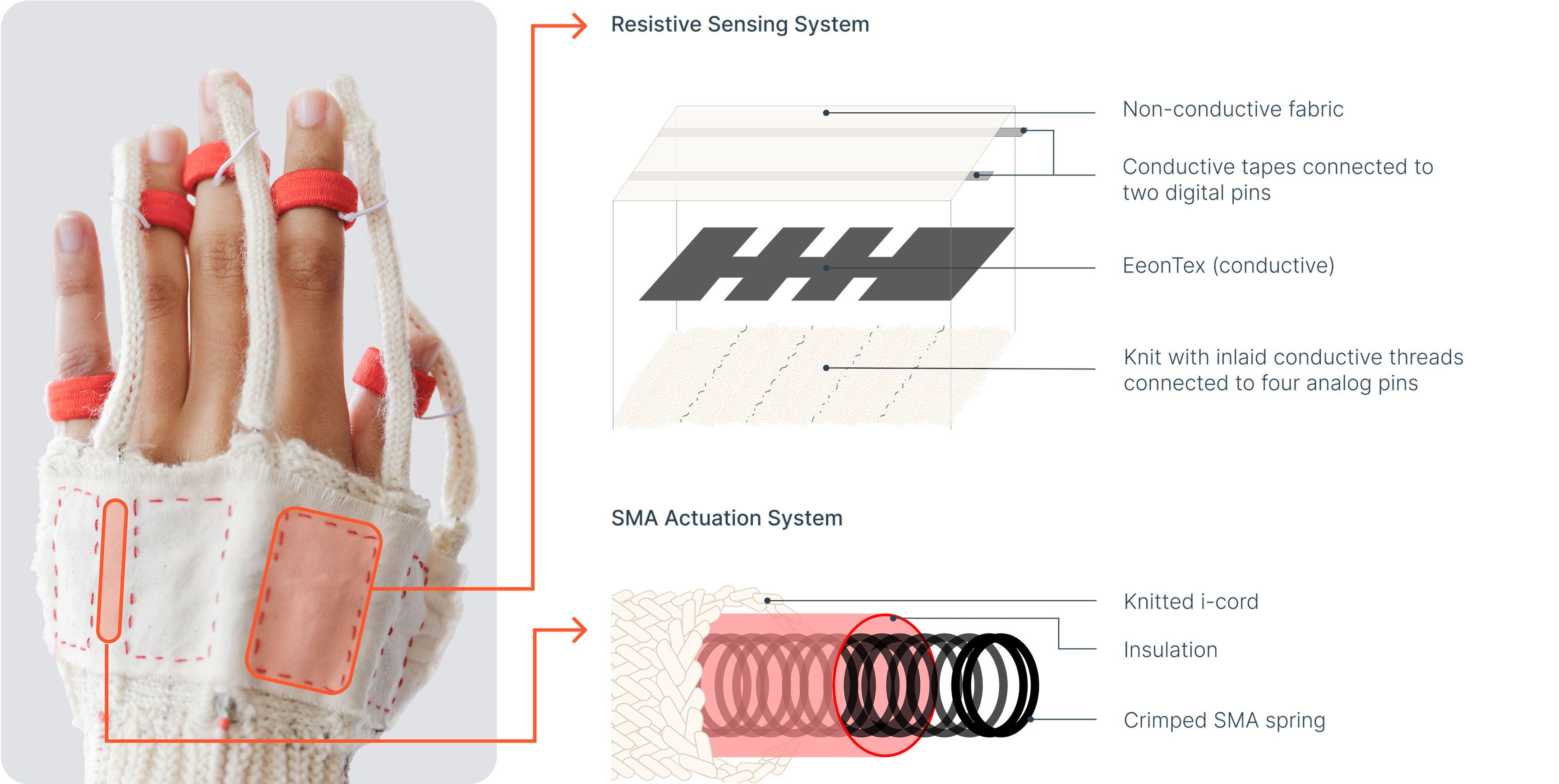
Simulating stroking sensations on back of the hand—the second most common affective touch during Primary Research.

Breathability
Open palm Fingerless
Elasticity
Bi-directional Adjustable straps
Durability
Knitted
User Testing
We asked 10 female participants to describe the sensation and choose the human touch it most resembled.

The most commonly mentioned adjectives for describing the SMA-spring-actuated sensation were warm, strange, and pleasant. Some described the tightening of the finger straps as "gripping," while others reported that the visual shape change of the glove influenced their perception.

Final Physical prototype
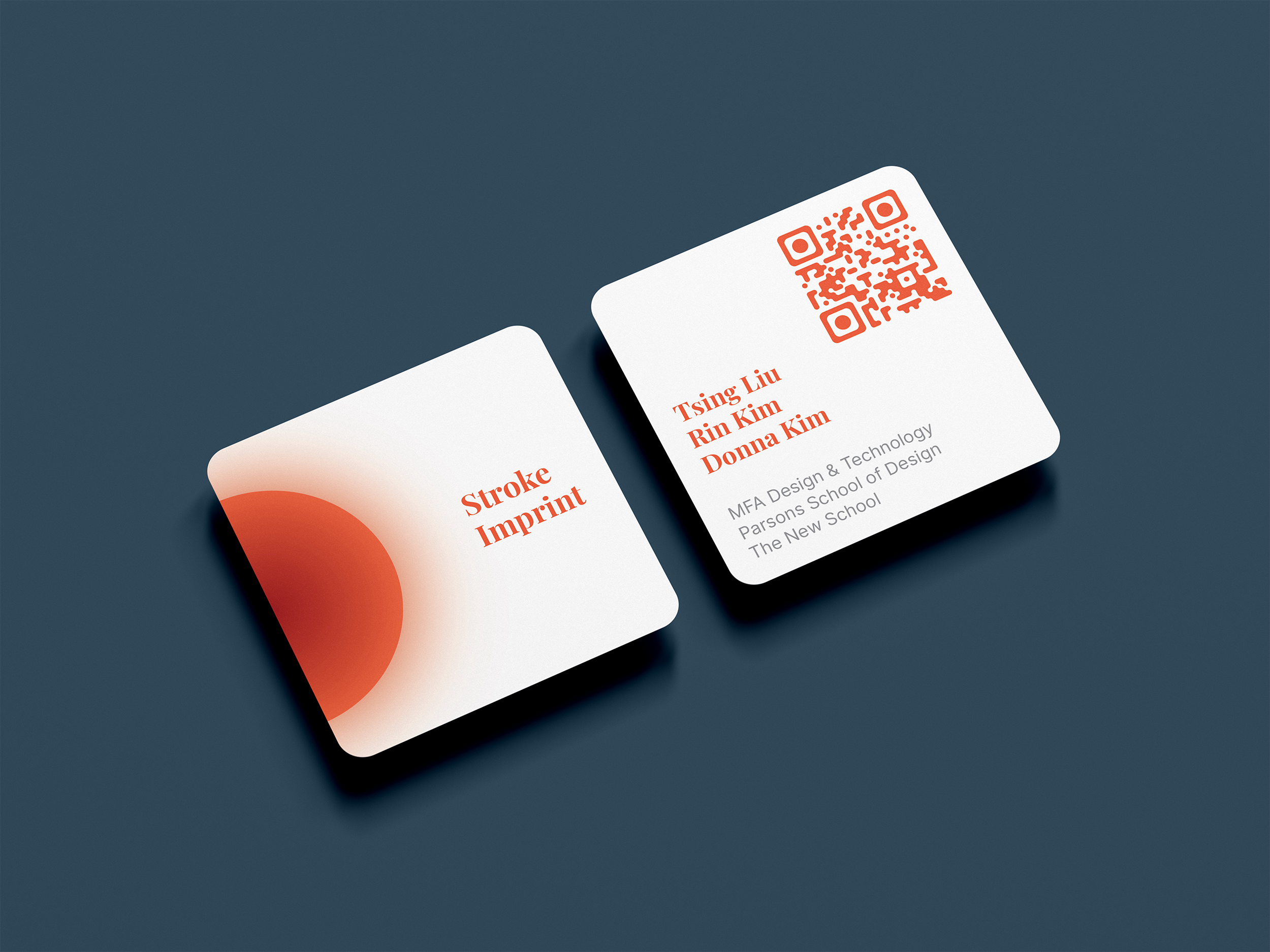
Merch Design
Key Results
30
26
2.1k
User interactions
GoFundMe donations
Travel fund raised
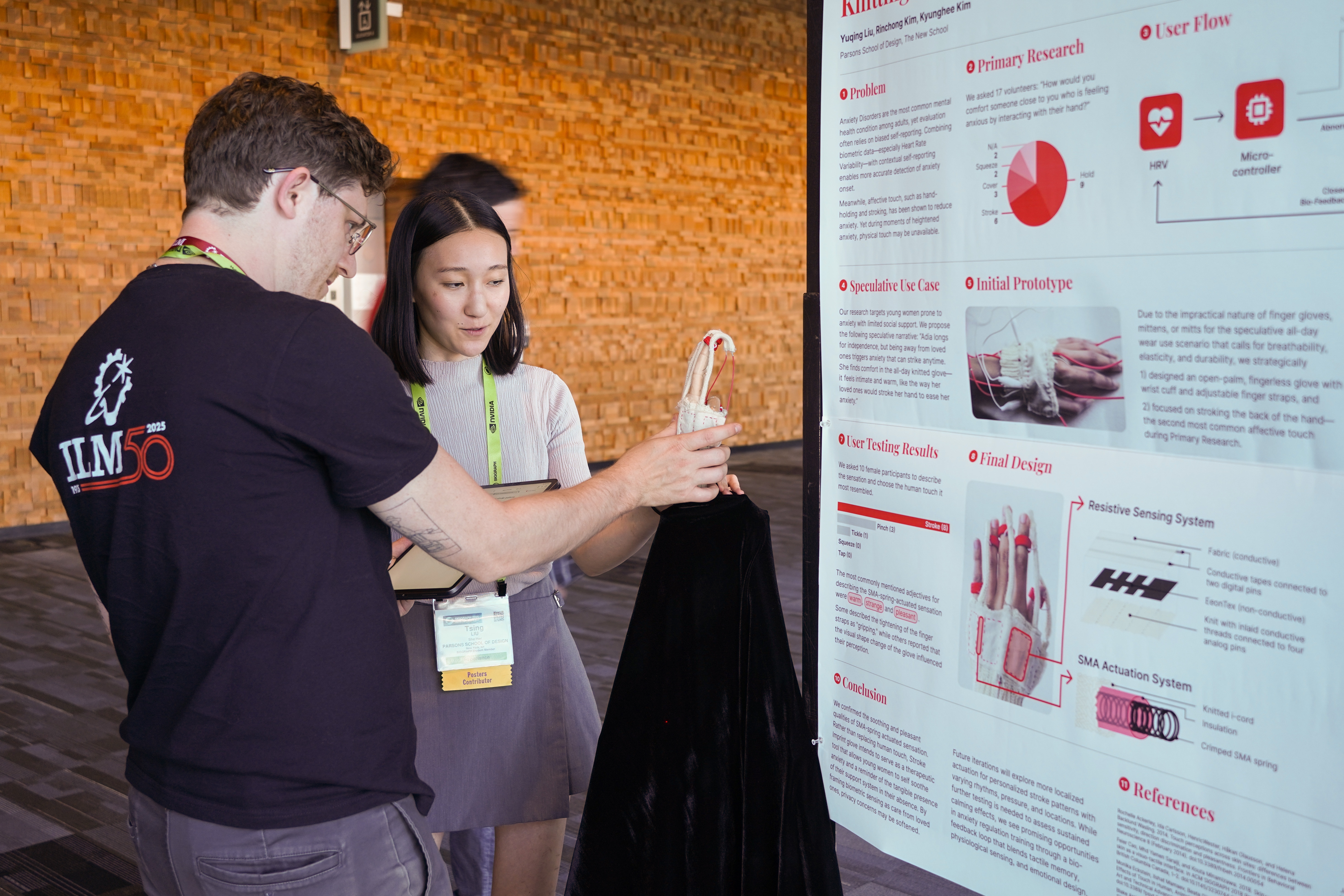
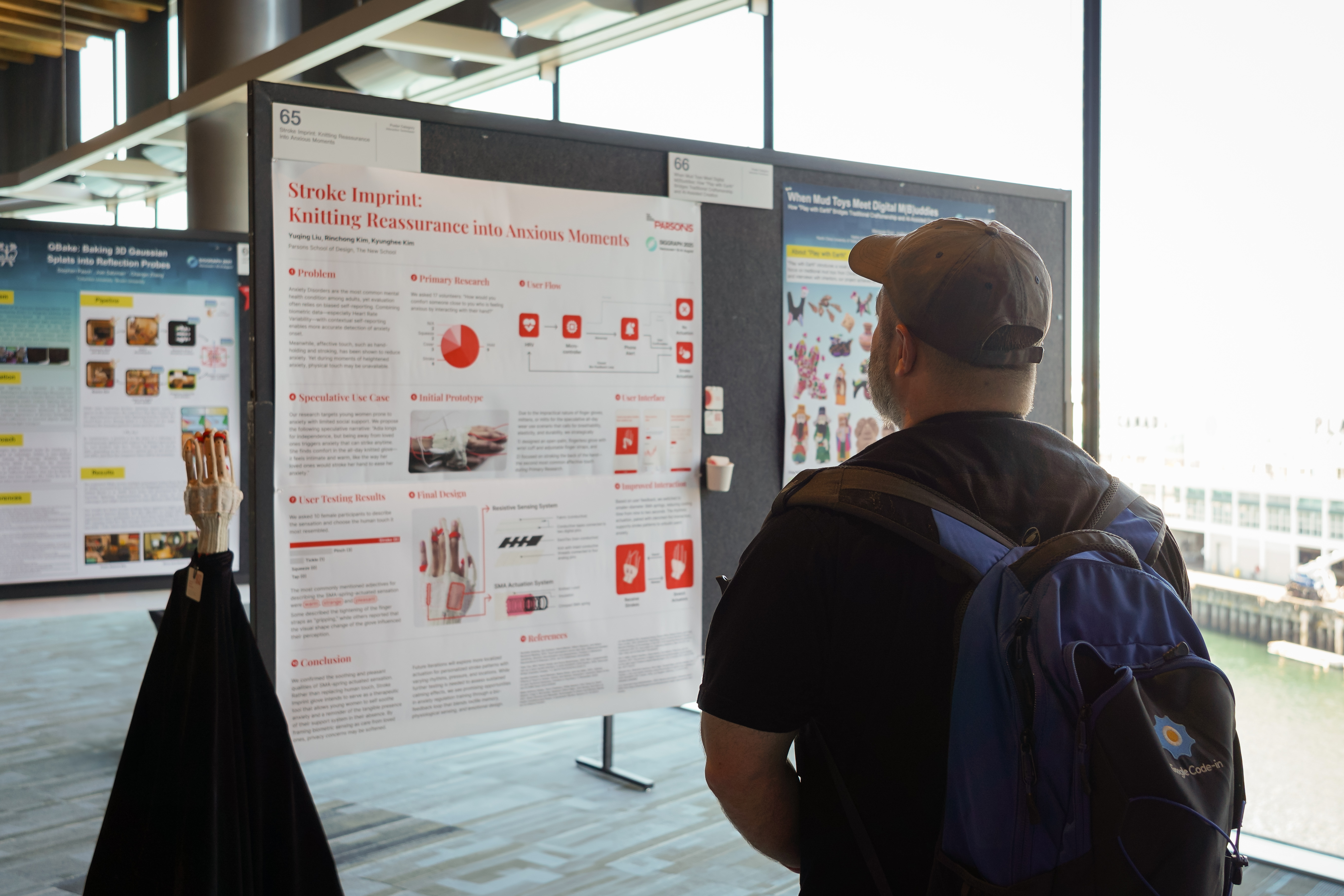
Takeaway
Rather than replacing human touch, Stroke Imprint glove intends to serve as a therapeutic tool that allows young women to self soothe anxiety and a reminder of the tangible presence of their support system in their absence. By framing biometric sensing as care from loved ones, privacy concerns may be softened.
Future iterations will explore more localized actuation for personalized stroke patterns with varying rhythms, pressure, and locations. While further testing is needed to assess sustained calming effects, we see promising opportunities in anxiety regulation training through a bio-feedback loop that blends tactile memory, physiological sensing, and emotional design.
Special thanks to
Aashita Verma and Sindhu Kruttiventi for hand modeling; Ayodamola Okuseinde, Cathal Pratt, Danielle Jackson, and Yuanning Han for their feedback on writing and publication; Anothony Deen, Bobby Marcus, Harpreet Sareen, and Hossein Adeli Jelodar, for their feedback on our prototypes
This project would have been impossible without the unwavering support from Parsons DT community during user testing, as well as the generous support from our list of donors